








Our company is involved in preparing official permits from the Polish Ministry of Development and Technology, which allows us to export all dual-use drones, optics, and portable radiophones without VAT on the Polish side / and without VAT on the Ukrainian side.
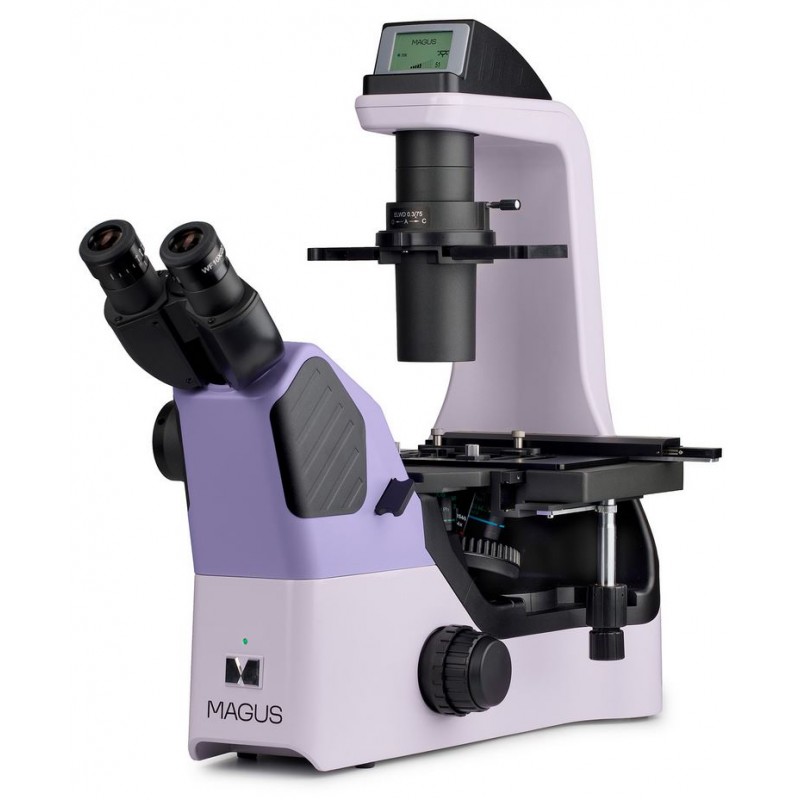
Magus Bio V360 Biological Inverted Microscope (83483)
This research-grade inverted microscope is designed for the study of liquid precipitates, cell colonies, living cells, tissue cultures, and other stained or unstained specimens placed in laboratory glassware. Its inverted optical layout allows the use of Petri dishes, multi-well plates, vials, roller bottles, and flasks up to 75 mm high with a bottom thickness of 1.2 mm, using objectives specifically designed for this type of glassware. When the condenser is removed, the microscope enables observation of cell cultures in Petri dishes or cylindrical flasks up to 187 mm high.
6179.49 $ net price (non-EU countries)
Anatolii Livashevskyi
Product Manager /
/ 
+48721808900 +48721808900
 +48721808900
[email protected]
Description
This research-grade inverted microscope is designed for the study of liquid precipitates, cell colonies, living cells, tissue cultures, and other stained or unstained specimens placed in laboratory glassware. Its inverted optical layout allows the use of Petri dishes, multi-well plates, vials, roller bottles, and flasks up to 75 mm high with a bottom thickness of 1.2 mm, using objectives specifically designed for this type of glassware.
When the condenser is removed, the microscope enables observation of cell cultures in Petri dishes or cylindrical flasks up to 187 mm high. Observation is carried out in transmitted light using brightfield, phase contrast, and emboss contrast techniques. With optional components, Hoffman modulation contrast can also be applied. The microscope is widely used in medical, pharmacological, biological, and virological research, and the advanced configuration is suitable for IVF applications.
Microscope head
The microscope is equipped with a binocular head with infinity-corrected optics. A digital camera is mounted via a side port on the microscope head. Light beam splitting is selectable between 100/0 and 0/100, directing all light either to the eyepieces or to the camera. A dedicated slot with a plug is provided for installing the emboss contrast slider.
Revolving nosepiece
A coded revolving nosepiece accommodates five objectives. One slot remains free, allowing the installation of an additional objective to extend the magnification range.
Objectives
The microscope uses infinity-corrected plan achromatic objectives with a long working distance, optimized for dishes with a 1.2 mm bottom thickness. The parfocal distance is 60 mm.
The 4× objective is intended for brightfield observation. The 10×, 20×, and 40× objectives are phase objectives that incorporate a phase ring in the exit pupil plane. These objectives are designed primarily for phase contrast microscopy, but they are also suitable for brightfield and emboss contrast techniques.
Maintaining comfortable brightness when changing magnification
Objectives with different magnifications transmit varying amounts of light, requiring brightness adjustment each time magnification changes. Switching from high to low magnification can cause a sudden increase in brightness, leading to eye fatigue.
This microscope is equipped with an intelligent brightness control system. The system memorizes the brightness level selected for each objective and automatically restores the correct brightness when the nosepiece is rotated. This feature reduces adjustment time, improves user comfort, and is especially beneficial during work that requires frequent changes in magnification.
Focusing mechanism
The coaxial coarse and fine focus knobs are positioned low on the microscope body, allowing the researcher to rest their hands comfortably on the table while working. A tension adjustment ring on the right side enables the user to set the preferred resistance of the coarse focusing movement.
Stage
The microscope features a fixed mechanical stage. A dedicated mechanism moves laboratory glassware smoothly in two perpendicular directions, ensuring precise examination without missing any areas of the specimen. A long stage control handle allows comfortable operation with the hand resting on the table. A universal dish holder is included as standard.
Condenser
The condenser has a numerical aperture of 0.3 and a working distance of 75 mm. A slot in the condenser accepts either a phase contrast slider or an emboss contrast slider with a sector diaphragm.
The phase contrast slider contains three apertures: one with a phase insert for 10×, 20×, and 40× objectives, and two apertures for brightfield observation. Alignment between the phase ring and the objective is performed using a centering telescope.
The emboss contrast slider also contains three apertures. Emboss contrast is achieved by inserting the sector diaphragm into the optical path and positioning the slider to match the active objective. When a green filter (ND6) is placed in the sector diaphragm slot, color halos at specimen edges are reduced. The remaining apertures are intended for brightfield use: one for the 4× objective and one shared by the 10×, 20×, and 40× objectives.
Illumination
Illumination is provided by a 3 W LED light source, delivering sufficient brightness for all supported techniques and objectives. The color temperature remains constant when brightness is adjusted, and the LED has a service life of up to 50,000 hours.
LCD status display
An LCD screen located on the microscope base displays the current objective magnification, light source brightness, and operating modes such as eco and sleep. Using the display and control knobs, the user can adjust brightness, lock brightness settings, and configure the auto-off timer and sleep mode.
Ergonomic design
The ergonomic design minimizes fatigue and supports productivity during extended research sessions. The microscope head is positioned at a comfortable viewing angle to reduce strain on the neck and back. The low, compact stage allows easy handling of laboratory glassware, while the long stage control handle enables operation without lifting the hand from the table. The low-mounted focusing knobs and smooth focusing mechanism allow effortless and precise adjustment.
Accessories
A wide range of accessories is available for this microscope. Additional eyepieces extend the magnification range and help maximize the potential of frequently used objectives. The Hoffman modulation contrast device expands contrast techniques, enabling observation of structures invisible in brightfield and allowing real-time study of dynamic processes.
A digital camera can output images to a monitor, store files, and enable real-time measurement via software. A calibration slide supports accurate measurement and can be used with scaled eyepieces or camera software. Dish holders and stage inserts allow secure mounting of culture vessels of various shapes and sizes.
Key features
-
Research of stained and unstained specimens in laboratory glassware, including Petri dishes, plates, and flasks up to 187 mm high
-
Microscopy techniques: brightfield, phase contrast, and emboss contrast, with optional Hoffman modulation contrast
-
Coded revolving nosepiece with automatic brightness adjustment for each objective
-
Binocular head with side camera port and 100/0 or 0/100 beam splitting
-
Energy-efficient 3 W LED transmitted-light illuminator with up to 50,000 hours of service life
-
Condenser with slider slot; phase contrast slider included with centered phase rings
-
Smart lighting system with automatic brightness control, dimming lock, auto-off timer, and LCD status display
-
Mechanical stage with X–Y glassware movement, universal dish holder, and long control handle for comfort
The kit includes
-
Stand with built-in power supply, transmitted light source, focusing system, stage, condenser mount, and revolving nosepiece
-
Condenser with slider slot
-
Binocular microscope head with side tube
-
Infinity-corrected plan achromatic objectives:
-
4×/0.10, WD 30 mm
-
10×/0.25 phase, WD 10.2 mm
-
20×/0.40 phase, WD 12 mm
-
40×/0.60 phase, WD 2.2 mm
-
-
Two 10×/22 mm eyepieces with long eye relief and diopter adjustment
-
Eyecups
-
Centering telescope
-
Phase contrast slider with centered phase rings
-
Emboss contrast device
-
Green filter
-
Universal dish holder
-
C-mount camera adapter
-
AC power cord
-
Dust cover
-
User manual and warranty card
Available on request
-
15×/16 mm eyepieces (pair)
-
20×/12 mm eyepieces (pair)
-
Hoffman modulation contrast device
-
Digital camera
-
Calibration slide
-
Monitor
Technical specifications
-
Product ID: 83483
-
Brand: MAGUS
-
Warranty: 5 years
-
Package size: 56 × 65 × 67 cm
-
Shipping weight: 24.4 kg
-
Type: biological, light/optical
-
Microscope head: binocular, Siedentopf, with side tube
-
Head inclination angle: 45°
-
Standard magnification range: 40×–400×
-
Optional magnification range: up to 800×
-
Eyepiece tube diameter: 30 mm
-
Objectives: infinity plan achromatic, parfocal distance 60 mm
-
Revolving nosepiece: 5-position, coded
-
Stage size: 250 × 170 mm
-
Stage travel: 80 / 128 mm
-
Condenser: NA 0.3, working distance 75 mm, with slider slot and adjustable aperture
-
Focus system: coaxial coarse and fine focus, fine focus resolution 0.002 mm
-
Illumination: LED, brightness adjustable
-
Power supply: 100–240 V, 50/60 Hz
-
Operating temperature range: +10 °C to +35 °C
-
Additional features: automatic brightness control, eco and sleep modes, LCD status display
-
Intended users: experienced users and professionals
-
Application: laboratory and medical research
-
Observation methods: brightfield, phase contrast, emboss contrast
-
Supplied protective accessory: dust cover
Data sheet

Official permits of the Ministry of Development and Technology
Our company is involved in preparing official permits from the Polish Ministry of Development and Technology, which allows us to export all dual-use drones, optics, and portable radiophones without VAT on the Polish side / and without VAT on the Ukrainian side.