








Our company is involved in preparing official permits from the Polish Ministry of Development and Technology, which allows us to export all dual-use drones, optics, and portable radiophones without VAT on the Polish side / and without VAT on the Ukrainian side.
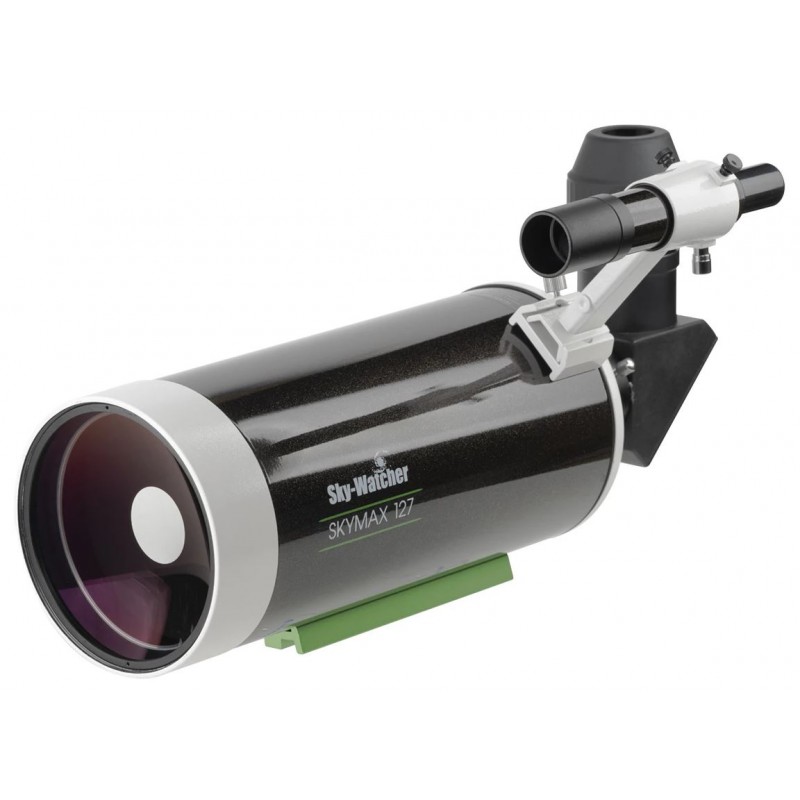
Sky-Watcher BKMAK 127 OTAW Telescope (SW-3004)
The MAK 127 telescope is an excellent choice for astronomy enthusiasts seeking a compact instrument with impressive capabilities for observing the Moon and planets of the Solar System. Maksutov telescopes feature reduced coma and only minimal chromatic aberration, resulting in exceptionally sharp and high-contrast images. One of the major advantages of the Maksutov design is its short tube length, compact construction, and relatively low weight. Despite its compact size, the MAK 127 offers a long focal length of 1500 mm, allowing the use of high magnifications that are essential for studying fine details on planetary surfaces and the Moon.
435 $ net price (non-EU countries)
Anatolii Livashevskyi
Product Manager /
/ 
+48721808900 +48721808900
 +48721808900
[email protected]
Description
Sky-Watcher BKMAK 127 OTAW Telescope (SW-3004)
The MAK 127 telescope is an excellent choice for astronomy enthusiasts seeking a compact instrument with impressive capabilities for observing the Moon and planets of the Solar System. Maksutov telescopes feature reduced coma and only minimal chromatic aberration, resulting in exceptionally sharp and high-contrast images.
One of the major advantages of the Maksutov design is its short tube length, compact construction, and relatively low weight. Despite its compact size, the MAK 127 offers a long focal length of 1500 mm, allowing the use of high magnifications that are essential for studying fine details on planetary surfaces and the Moon.
This type of optical system performs particularly well in urban environments, where bright skies make observing faint deep-sky objects more difficult. The telescope includes a 2-inch focuser, a 2-inch diagonal, and a 28 mm LE eyepiece providing 54x magnification.
Contrary to common belief, the MAK 127 is also highly effective for observing deep-sky objects, especially the brightest and most compact targets such as the Great Orion Nebula (M42), the Hercules Globular Cluster (M13), and the Bode's Galaxy pair (M81 and M82) in Ursa Major.
Optical System
The telescope consists of a spherical meniscus corrector lens (negative crown-glass meniscus lens), a primary mirror, and a secondary mirror mounted on the inner side of the corrector. Telescopes of this type significantly reduce coma and astigmatism while exhibiting only negligible chromatic aberration.
The result is remarkably sharp, high-contrast imagery. Thanks to the long focal length and relatively slow focal ratio, this telescope is exceptionally well suited for lunar and planetary observation.
The telescope gathers approximately 235 times more light than the human eye under dark-sky conditions, allowing observations of objects down to nearly magnitude 12.1 (assuming naked-eye visibility of magnitude 6 stars). Its optical resolution enables the separation of double stars with an angular distance greater than 1.1 arcseconds.
Mounting
The telescope is supplied without a mount.
The optical tube can be attached directly to a photographic tripod using the built-in mounting connection. Due to its long focal length, an astronomical mount of at least AZ4 (alt-azimuth) or EQ3-2 (equatorial) class is recommended for optimal performance.
Astronomical Observations
Solar System
-
Lunar surface features larger than approximately 1.5–2 km.
-
Sunspots and their structure.
-
All planets of the Solar System.
-
Phases of Mercury and Venus.
-
Martian disk, polar caps, and dark surface features during favorable oppositions.
-
Jupiter's equatorial cloud bands, the Great Red Spot, Galilean moons, moon shadow transits, and moon occultations.
-
Saturn's rings, including the Cassini Division; under good conditions, the shadow of the rings on the planetary disk, Titan, and several smaller moons.
-
Uranus and Neptune.
-
Asteroid motion against the background stars.
-
Bright comets.
Stars
-
Approximately 1.8 million stars across the sky down to magnitude 12.1.
-
Double and multiple stars separated by more than 1.1 arcseconds.
-
Color variations among the brightest stars.
Deep-Sky Objects
-
Nearly all objects in the Messier Catalogue.
-
Hundreds of globular clusters.
-
Hundreds of open star clusters.
-
Brighter nebulae.
-
Dozens of galaxies.
Terrestrial Observations
This optical design is not ideally suited for terrestrial viewing. To obtain a correctly oriented image, a prism diagonal should be used. With an appropriate diagonal and mount, the telescope can serve as a simple instrument for daytime terrestrial observations.
Included Accessories
-
Dovetail mounting rail.
-
2" 90° diagonal with 1.25" adapter.
-
2" 28 mm eyepiece.
-
6x30 finder scope.
-
2" focuser.
Technical Specifications
-
Catalog Number: SW-3004
-
Telescope Series: Sky-Watcher SkyMax
-
Optical Design: Maksutov-Cassegrain
-
Mount Type: Optical Tube Assembly Only (No Mount)
-
Aperture: 127 mm
-
Focal Length: 1500 mm
-
Focal Ratio: f/11.8
-
Limiting Magnitude: 13.1
-
Maximum Useful Magnification: 254x
-
Rayleigh Resolution Limit: 1.13 arcseconds
-
Dawes Resolution Limit: 0.91 arcseconds
-
Light Gathering Power: 329x
-
Optical Tube Weight: 3.4 kg
-
Tube Length: 330 mm
-
Tube Diameter: 140 mm
-
Focuser Type: SCT/MAK
-
Focuser Diameter: 2"
-
Fine Focus Adjustment: No
-
Mounting Rail Standard: Vixen
-
Warranty Period: 60 months
Data sheet

Official permits of the Ministry of Development and Technology
Our company is involved in preparing official permits from the Polish Ministry of Development and Technology, which allows us to export all dual-use drones, optics, and portable radiophones without VAT on the Polish side / and without VAT on the Ukrainian side.