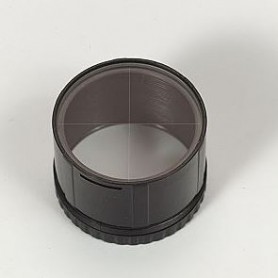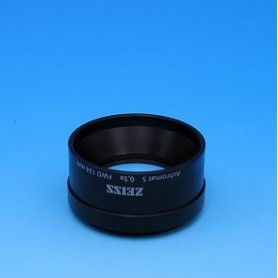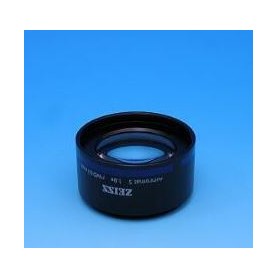
Magus 05A 0.5x Achromatic Main Objective (85136)
211.53 £
Tax included
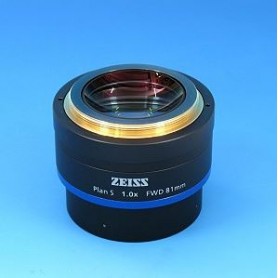
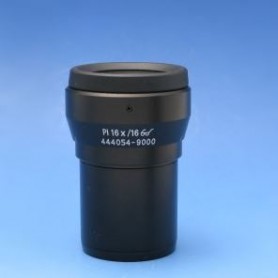
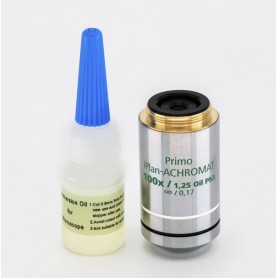
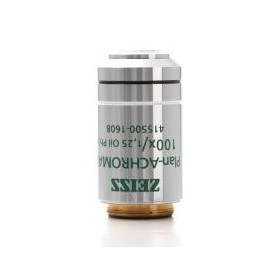
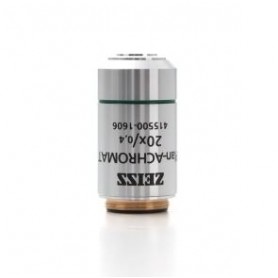
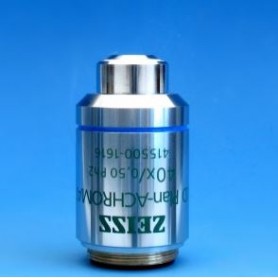
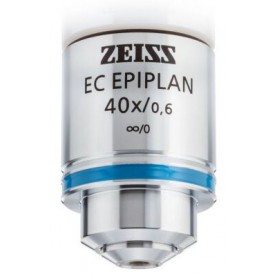
To create a three-dimensional image, an Abbe stereomicroscope uses a common main objective positioned precisely perpendicular to the specimen plane. Light transmitted through or reflected from the sample enters the main objective and is divided into two parallel optical paths. The stereoscopic angle is 11 degrees. The separated light beams are then directed to the eyepieces or to a digital camera. Replacing the main objective changes the microscope’s overall magnification, field of view, and working distance.
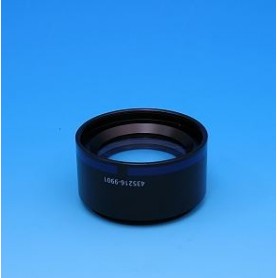
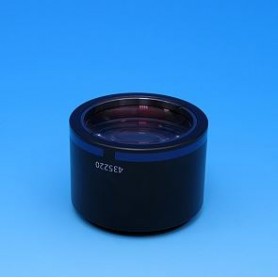
Magus 2APO 2x Plan Apochromatic Main Objective (85137)
1523.12 £
Tax included
To generate a three-dimensional image, a CMO stereomicroscope uses a common main objective positioned strictly perpendicular to the specimen plane. Light transmitted through or reflected from the specimen enters this objective and is divided into two parallel optical paths. The stereoscopic angle is 11 degrees. The separated light beams are then directed to the eyepieces or to a digital camera. Replacing the main objective changes the microscope’s magnification, field of view, and working distance.
Magus BTP A10 Beamsplitter with two ports (85142)
761.55 £
Tax included
The CMO (Common Main Objective) system allows additional accessories to be integrated into the optical path. A two-port beamsplitter is installed between the microscope head and the zoom objective, enabling the simultaneous use of two digital cameras. A stereomicroscope with a CMO design produces high-quality digital images without field distortion. This makes it an excellent choice for photo and video recording, as well as for presentations and lectures that rely on visual materials.
Magus BOP A10 Beamsplitter with one port (85143)
394.31 £
Tax included
The CMO (Common Main Objective) system allows additional accessories to be incorporated into the optical path. A beamsplitter with a single port is mounted between the microscope head and the zoom objective and is used for installing a digital camera. A stereomicroscope built with a CMO design produces high-quality digital images without field distortion. This makes it well suited for photo and video recording, as well as for presentations and lectures that rely on visual demonstrations.
Magus SPD A10 Polarizer/Analyzer Set (85146)
169.23 £
Tax included
This polarizer and analyzer set is designed to enable polarized light techniques. It includes a polarizer and an analyzer, and the intensity of transmitted light varies depending on their relative orientation. When the polarizer and analyzer are positioned perpendicular to each other, complete light extinction occurs. Polarized light is used to study anisotropic samples such as geological specimens, biological structures, and polymer materials.
Magus XY A10 Mechanical Stage for stereomicroscopes (85148)
236.92 £
Tax included
The stage is mounted in the base of the stereomicroscope and is used for precise and smooth movement of the sample beneath the objective, as well as for documenting observations with a camera. Coaxial control knobs allow controlled movement of the specimen along the X axis (right and left) and the Y axis (forward and backward). The transparent glass surface of the stage enables work with both reflected and transmitted light. A vernier scale is provided for precise measurement along a single axis.
Magus HCM360 Device for working with the Hoffman modulation contrast, with objective set (85123)
1726.21 £
Tax included
The MAGUS HCM360 system is a complete set designed for Hoffman modulation contrast microscopy. It includes plan achromatic objectives, a dedicated condenser, and a slider. The objective modulator is aligned with the slider’s slit apertures using a centering telescope supplied with the microscope. Hoffman modulation contrast produces high-resolution, relief-like images of living specimens. It enhances visibility and contrast while preserving fine structural detail and avoiding diffraction halos. This makes it suitable for long working distances and high numerical apertures.
Magus FM4 A10 Focus Mount (85150)
169.23 £
Tax included
The focusing mechanism is a structural component of the stereomicroscope designed to secure the microscope head to the stand. It enables precise vertical movement of the microscope head, allowing accurate focusing on the specimen. Focus adjustment is performed using coaxial knobs, which provide smooth and controlled operation during observation.
Magus SPH2 Phase Сontrast Device (85152)
2030.83 £
Tax included
The MAGUS SPH2 phase contrast system includes a set of phase contrast sliders, a set of phase contrast objectives, and a centering telescope. This system is designed for the observation of transparent, low-contrast specimens that are difficult or impossible to see using brightfield illumination. Because staining procedures can damage or kill living cells, phase contrast offers a key advantage by allowing the study of living, unstained organisms in their natural state. The technique is widely used in medicine, ecology, pharmacology, agriculture, and related fields.
Magus Epi-FL04M LED Epi-Fluorescence Attachment, fluorescence filter cubes B/G/UV (85153)
5220.95 £
Tax included
The epi-fluorescence attachment is designed to enable fluorescence microscopy. This technique relies on the ability of certain substances to emit light when excited by illumination at a specific wavelength. Some specimens naturally exhibit autofluorescence, while others require treatment with fluorochromes to produce a fluorescent signal. The attachment is installed in the optical path between the microscope head and the stand. Inside the unit is a four-position rotating turret that holds three broadband fluorescence filter sets for blue (B), green (G), and ultraviolet (UV) excitation.
Magus FL S-APO60 PlanF S-Apo 4х/10х/20х/40х/100х oil ∞/0.17 H60mm Objective Set (85154)
3384.73 £
Tax included
The plan semi-apochromatic fluorescent objective is designed for both transmitted-light and fluorescence microscopy. The objective lenses are manufactured from fluorite, a highly transparent mineral that performs consistently across a wide wavelength range. Fluorite does not exhibit autofluorescence or birefringence and provides correction of the secondary spectrum. A high numerical aperture increases resolving power, producing images in the eyepieces and through a digital camera that are brighter, cleaner, and higher in contrast than those obtained with standard plan achromatic objectives.
Magus Epi-FL04 LED Epi-Fluorescence Attachment, fluorescence filter cubes FITC/TRITC/DAPI (85156)
6143.28 £
Tax included
The epi-fluorescence attachment is designed for fluorescence microscopy. This technique is based on the ability of certain substances to emit light when excited by illumination at a specific wavelength. Some specimens show natural autofluorescence, while others require staining with fluorochromes to produce a fluorescent signal. The attachment is installed in the optical path between the microscope head and the stand. Inside the unit is a four-position rotating turret equipped with three narrow-band fluorescence filter sets for the fluorochromes DAPI, FITC, and TRITC. 
Magus Epi-FL06 Epi-Fluorescence Attachment, mercury lamp, fluorescence filter cubes В/G/UV/V/R/FITC/TRITC/DAPI (85157)
7564.87 £
Tax included
The epi-fluorescence attachment is designed for fluorescence microscopy. This technique is based on the ability of certain substances to emit light when excited by illumination at a specific wavelength. Some specimens naturally exhibit autofluorescence, while others require treatment with fluorochromes to produce a visible fluorescent signal. The attachment is installed in the optical path between the microscope head and the stand. Inside the unit is a six-position rotating turret fitted with fluorescence filters.
Magus SPH360 Phase Contrast Device, with set of Plan S-Apo Ph 4х/10х/20х/40х/60х H60mm objectives (85160)
8554.9 £
Tax included
The MAGUS SPH360 phase contrast system includes a set of phase contrast sliders and phase contrast objectives. It is designed for observing transparent, low-contrast specimens that are difficult or impossible to see using brightfield illumination. Because staining procedures can damage or kill living cells, phase contrast microscopy allows living, unstained organisms to be examined in their natural condition. This technique is widely used in medicine, ecology, pharmacology, agriculture, and related fields.
Levenhuk MED D30T LCD Digital Trinocular Microscope (73999)
1629.74 £
Tax included
The Levenhuk MED D30T LCD is a trinocular biological microscope equipped with a digital camera featuring a built-in LCD screen. It allows full control of image and video settings directly on the camera display, without the need to connect the microscope to a computer. Image capture, video recording, parameter adjustment, and data review can all be performed directly on the screen. The microscope is built with infinity-corrected semi-plan achromatic optics and supports Köhler illumination, making it a professional instrument suitable for a wide range of laboratory applications.
Levenhuk MED 25B Binocular Microscope (73992)
908.79 £
Tax included
The Levenhuk MED 25B microscope is a binocular laboratory instrument equipped with two condensers: one for brightfield and one for darkfield observation. Both condensers support oil immersion techniques. This microscope is designed for professional use in medicine, microbiology, biochemistry, and other scientific disciplines, and is suitable for research, diagnostic work, and educational purposes. It provides magnification up to 1000x, supports Köhler illumination, and enables detailed study of complex microstructures.
Levenhuk 400M Monocular Microscope (75419)
142.15 £
Tax included
The Levenhuk 400M Monocular Microscope is designed for laboratory research on biological samples. It produces sharp, high-contrast images and supports observations at magnifications ranging from 40x to 400x. The microscope is suitable for use in medical, educational, and research environments. It features built-in LED illumination that can operate either on batteries or via an AC power supply. The optical system combines a wide-field eyepiece with achromatic objectives of different magnifications.
Magus Lum VD500L Fluorescence Inverted Digital Microscope (83022)
8884.92 £
Tax included
The MAGUS Lum V500L is an inverted microscope designed for fluorescence microscopy in reflected light as well as brightfield and phase-contrast microscopy in transmitted light. For fluorescence observation, it uses DAPI, FITC, and TRITC fluorochrome filters. The inverted configuration makes it possible to study samples directly in laboratory vessels such as Petri dishes and flasks. Standard lab ware up to 55 mm in height can be used, or up to 165 mm when the stand is tilted. The optical system is optimized for lab ware with a bottom thickness of 1.2 mm. 
Magus Metal V700 DIC Metallurgical Inverted Microscope (83714)
8461.82 £
Tax included
This microscope is designed for examining the microstructure of metals, alloys, semiconductor materials, and other opaque specimens. Its inverted construction places no limits on the size of the sample, with only the weight restricted to a maximum of 2 kg. Before observation, the specimen must be properly prepared and then placed on the stage with the surface facing downward. The microscope supports three reflected-light contrast techniques: brightfield, simple polarization, and differential interference contrast (DIC).
Magus Lum V500L Fluorescence Inverted Microscope (82909)
7531.02 £
Tax included
The MAGUS Lum V500L is an inverted microscope designed for fluorescence microscopy in reflected light and for brightfield and phase-contrast microscopy in transmitted light. Fluorescence observation is performed using filter sets for the DAPI, FITC, and TRITC fluorochromes. The inverted design allows specimens to be examined directly in common laboratory vessels such as Petri dishes and flasks. The maximum vessel height is 55 mm in the standard position, or up to 165 mm when the stand is tilted. The optical system is optimized for lab ware with a bottom thickness of 1.2 mm.
Magus Lum V500 Fluorescence Inverted Microscope (82908)
7061.45 £
Tax included
The MAGUS Lum V500 Fluorescent Inverted Microscope is engineered for observing samples placed in laboratory vessels up to 55 mm high with a bottom thickness of up to 1.2 mm. When the illuminator stand is tilted, the system can also accommodate larger laboratory ware up to 165 mm in height. The microscope supports observation in reflected light using fluorescence techniques, as well as transmitted light for brightfield and phase-contrast microscopy. It is designed for use in fields such as medicine, pharmacology, biochemistry, epidemiology, and related laboratory disciplines.
Magus Bio 290T Biological Microscope (83482)
6773.58 £
Tax included
This is a research-grade microscope designed for observing transparent and translucent biological samples such as smears and cross-sections in transmitted light using the brightfield method. With the installation of optional accessories, the microscope also supports darkfield, phase contrast, differential interference contrast (DIC), fluorescence, and polarization techniques. The motorized revolving nosepiece and motorized condenser automate objective changes and illumination adjustments.
Magus Metal 650 BD Metallurgical Microscope (82901)
6434.89 £
Tax included
The MAGUS Metal 650 BD Metallurgical Microscope is designed for examining the surfaces of photomasks, integrated circuits, printed circuit boards, and other large, elongated samples. It features an extra-large stage that supports oversized specimens and a highly precise fine-focus system with a 0.7 µm scale value, enabling accurate work at high magnifications. The microscope supports brightfield, darkfield, and polarized light observation methods, making it a practical choice for quality control laboratories, research facilities, and university departments.
Magus Metal V700 BD Metallurgical Inverted Microscope (82903)
5757.53 £
Tax included
The MAGUS Metal V700 BD is an inverted metallurgical microscope in which the revolving nosepiece is positioned beneath the specimen and observation is performed using reflected light. It supports brightfield, darkfield, and polarized light microscopy. The microscope is designed for examining metals, alloys, semiconductors, and other opaque materials, including large and heavy specimens weighing up to 2 kg. It is widely used in industrial production, manufacturing plants, quality control laboratories, universities, and research centers.