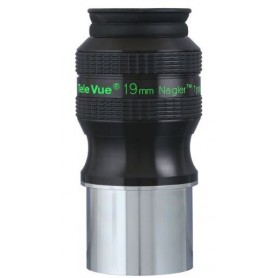
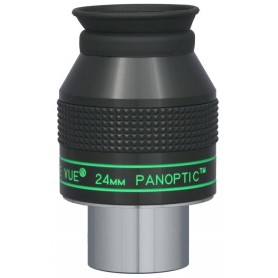
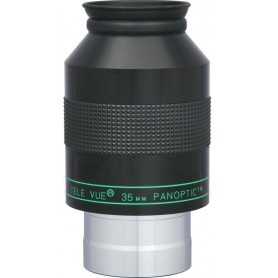
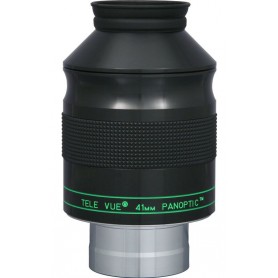
Takahashi TOE 10 mm Eyepiece (TKA00618)
54327.36 ¥
Tax included
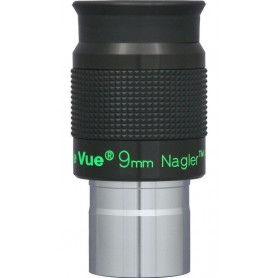
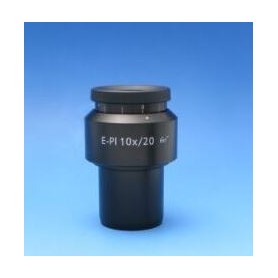
The Takahashi TOE 10 mm eyepiece is a high-end optical accessory designed to deliver exceptional image quality across a wide range of celestial objects. With a 58° apparent field of view and a comfortable 15 mm eye relief, it provides an enjoyable and immersive viewing experience at medium magnification. Its advanced optical configuration, consisting of 6 elements in 4 groups, produces sharp, high-contrast images with excellent color accuracy and very low distortion. 
Askar Filters Colour Magic D2 Duo-band Filter 2" (ASKAR DUO-BAND D2)
44094.38 ¥
Tax included
The Askar Colour Magic D2 Duo-band 2" Filter is a high-quality imaging filter designed to significantly enhance the contrast and detail of nebula photographs, even under heavy light pollution. This filter transmits light from ionized oxygen (OIII) and sulfur (SII). Capturing both spectral ranges at the same time allows astrophotographers to produce excellent images without relying on filter wheels or multiple separate filters.
Magus 60PL Plan 60х/0.80 ∞/0.17 Objective (85063)
38633.74 ¥
Tax included
This 60×/0.80 objective offers a resolution limit of 0.35 µm. Chromatic aberrations are corrected for blue and red wavelengths, spherical aberration is corrected for green, and field curvature is corrected across 90% of the field of view diameter, ensuring high image clarity and consistency. The objective is designed for infinity-corrected optical systems and features a parfocal distance of 45 mm. When paired with a 10×/20 mm eyepiece, it provides a 0.33 mm field of view diameter. It is optimized for specimens mounted with 0.17 mm cover slips, ensuring accurate focusing and image quality.
Magus 2PL60 Plan 2х/0.06 ∞/- H60mm Objective (85065)
28330.65 ¥
Tax included
This 2×/0.06 objective provides a resolution limit of 4.58 µm. Chromatic aberrations are corrected for blue and red wavelengths, spherical aberration is corrected for green, and field curvature is corrected across 90% of the field of view diameter, ensuring uniform image quality across most of the visible area. When used with a 10×/22 mm eyepiece, the objective delivers a wide 11 mm field of view with a depth of field of 76 µm. This makes it ideal for initial scanning of specimens and for quickly locating areas of interest.
Magus 20PL60 Plan 20х/0.40 ∞/0.17 H60mm Objective (85066)
37023.88 ¥
Tax included
This 20×/0.40 objective delivers a resolution limit of 0.69 µm. Chromatic aberrations are corrected for blue and red wavelengths, spherical aberration is corrected for green, and field curvature is corrected across 90% of the field of view diameter, ensuring sharp and uniform image quality. The objective is designed for infinity-corrected optical systems and features a parfocal distance of 60 mm. When combined with a 10×/22 mm eyepiece, it provides a 1.1 mm field of view diameter. The optical design is optimized for use with specimens mounted under 0.17 mm cover slips, allowing accurate focusing and consistent results.
Magus 60PL60 Plan 60х/0.80 ∞/0.17 H60mm Objective (85068)
56340.75 ¥
Tax included
This 60×/0.80 objective provides a resolution limit of 0.35 µm. Chromatic aberrations are corrected for blue and red wavelengths, spherical aberration is corrected for green, and field curvature is corrected across 90% of the field of view diameter, delivering sharp and evenly focused images. The objective is designed for infinity-corrected optical systems and features a parfocal distance of 60 mm. When used with a 10×/22 mm eyepiece, it produces a 0.36 mm field of view diameter. The optical design is optimized for specimens mounted with 0.17 mm cover slips, ensuring accurate focusing and reliable imaging results.
Magus 100PL60 W Plan 100х/1.10 ∞/0.17 H60mm Objective (85069)
49902.75 ¥
Tax included
This water immersion objective uses distilled water as the immersion medium. Distilled water has no inherent fluorescence and does not contaminate physiological solutions, making it especially suitable for biological research. Unlike oil immersion objectives, it requires no special cleaning procedures and eliminates additional costs associated with immersion oil or cleaning solvents. Oil immersion objectives deliver high resolution and contrast only when the specimen is in direct contact with the cover glass.
Magus 10PL60V Plan 10х/0.25 ∞/1.2 H60mm Objective (85120)
28116 ¥
Tax included
This objective is designed for brightfield microscopy. The MAGUS Bio V360 microscope kit includes phase objectives, which contain a metal film ring etched onto the inner lens. This ring is required for phase-contrast observations, as it introduces a quarter-wavelength phase shift relative to the remaining light and reduces overall light transmission. For this reason, objectives without phase plates are recommended for standard brightfield observations.
Magus 20PL60V Plan 20х/0.40 ∞/1.2 H60mm Objective (85121)
32134.21 ¥
Tax included
This objective is intended for brightfield microscopy. The MAGUS Bio V360 microscope kit includes phase objectives, which feature a metal film ring etched onto the inner lens. This ring is necessary for phase-contrast observations, as it introduces a quarter-wavelength phase shift relative to the remaining light and reduces light transmission. For this reason, objectives without phase plates are recommended for standard brightfield work. A 20×/0.40 objective provides a resolution limit of 0.69 µm.
Magus 40PL60V Plan 40х/0.60 ∞/1.2 H60mm Objective (85122)
61698.36 ¥
Tax included
This objective is designed for brightfield microscopy. The MAGUS Bio V360 microscope kit includes phase objectives that incorporate a metal film ring etched onto the inner lens. This ring is required for phase-contrast observations, as it introduces a quarter-wavelength phase shift relative to the rest of the light and reduces light transmission. For this reason, objectives without phase plates are recommended for standard brightfield use. A 40×/0.60 objective provides a resolution limit of 0.45 µm.
Magus 03A 0.3x Achromatic Main Objective (85134)
44988.75 ¥
Tax included
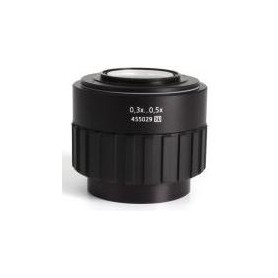
To generate a three-dimensional image, a CMO stereomicroscope uses a common main objective positioned strictly perpendicular to the specimen plane. Light transmitted through or reflected from the sample enters this main objective and is then divided into two parallel optical paths. The stereoscopic angle is 11 degrees. The separated light beams are directed to the eyepieces or to a digital camera. Changing the main objective alters the microscope’s overall magnification, field of view, and working distance.
Magus 05A 0.5x Achromatic Main Objective (85136)
40167.76 ¥
Tax included
To create a three-dimensional image, an Abbe stereomicroscope uses a common main objective positioned precisely perpendicular to the specimen plane. Light transmitted through or reflected from the sample enters the main objective and is divided into two parallel optical paths. The stereoscopic angle is 11 degrees. The separated light beams are then directed to the eyepieces or to a digital camera. Replacing the main objective changes the microscope’s overall magnification, field of view, and working distance.
Magus 2APO 2x Plan Apochromatic Main Objective (85137)
289222.16 ¥
Tax included
To generate a three-dimensional image, a CMO stereomicroscope uses a common main objective positioned strictly perpendicular to the specimen plane. Light transmitted through or reflected from the specimen enters this objective and is divided into two parallel optical paths. The stereoscopic angle is 11 degrees. The separated light beams are then directed to the eyepieces or to a digital camera. Replacing the main objective changes the microscope’s magnification, field of view, and working distance.
Magus FL S-APO60 PlanF S-Apo 4х/10х/20х/40х/100х oil ∞/0.17 H60mm Objective Set (85154)
642718.46 ¥
Tax included
The plan semi-apochromatic fluorescent objective is designed for both transmitted-light and fluorescence microscopy. The objective lenses are manufactured from fluorite, a highly transparent mineral that performs consistently across a wide wavelength range. Fluorite does not exhibit autofluorescence or birefringence and provides correction of the secondary spectrum. A high numerical aperture increases resolving power, producing images in the eyepieces and through a digital camera that are brighter, cleaner, and higher in contrast than those obtained with standard plan achromatic objectives.
Magus SPH2 Phase Сontrast Device (85152)
385630.5 ¥
Tax included
The MAGUS SPH2 phase contrast system includes a set of phase contrast sliders, a set of phase contrast objectives, and a centering telescope. This system is designed for the observation of transparent, low-contrast specimens that are difficult or impossible to see using brightfield illumination. Because staining procedures can damage or kill living cells, phase contrast offers a key advantage by allowing the study of living, unstained organisms in their natural state. The technique is widely used in medicine, ecology, pharmacology, agriculture, and related fields.
Magus HCM360 Device for working with the Hoffman modulation contrast, with objective set (85123)
327785.79 ¥
Tax included
The MAGUS HCM360 system is a complete set designed for Hoffman modulation contrast microscopy. It includes plan achromatic objectives, a dedicated condenser, and a slider. The objective modulator is aligned with the slider’s slit apertures using a centering telescope supplied with the microscope. Hoffman modulation contrast produces high-resolution, relief-like images of living specimens. It enhances visibility and contrast while preserving fine structural detail and avoiding diffraction halos. This makes it suitable for long working distances and high numerical apertures.
Magus SPH360 Phase Contrast Device, with set of Plan S-Apo Ph 4х/10х/20х/40х/60х H60mm objectives (85160)
1624471.68 ¥
Tax included
The MAGUS SPH360 phase contrast system includes a set of phase contrast sliders and phase contrast objectives. It is designed for observing transparent, low-contrast specimens that are difficult or impossible to see using brightfield illumination. Because staining procedures can damage or kill living cells, phase contrast microscopy allows living, unstained organisms to be examined in their natural condition. This technique is widely used in medicine, ecology, pharmacology, agriculture, and related fields.